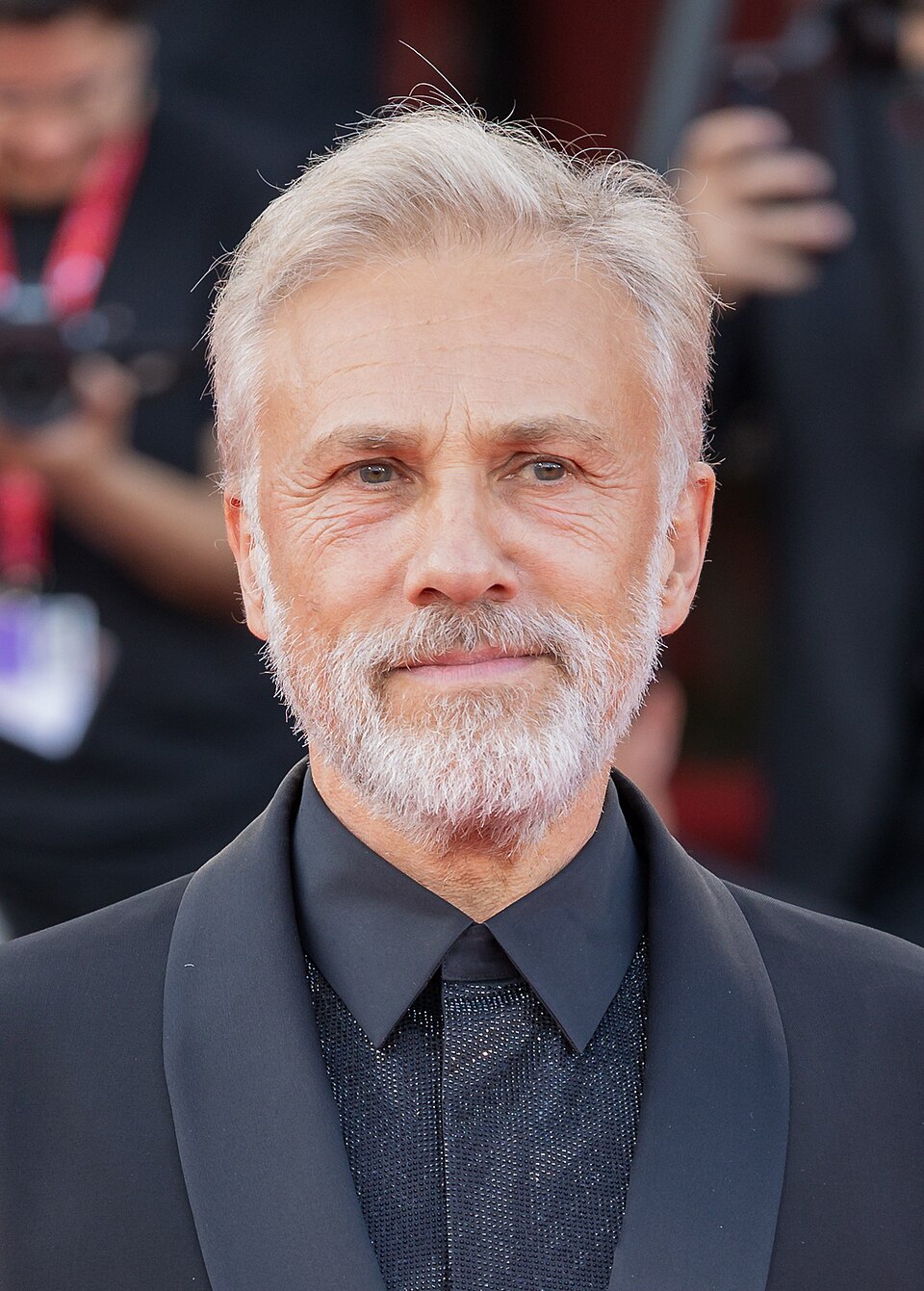
Christoph Waltz Young: His Journey to International Fame
Before becoming a household name, synonymous with chilling villainy and captivating charm, Christoph Waltz spent decades honing his craft away from the glare of Hollywood spotlights. The question of Christoph Waltz jung – what he was like in his formative years and during his extensive European career – offers a fascinating glimpse into the making of a truly world-class actor. His journey is a powerful testament to perseverance, talent, and the unexpected twists of fate that can redefine a career after decades of dedicated work.
For many, Christoph Waltz burst onto the scene as the chillingly eloquent Colonel Hans Landa in Quentin Tarantino's Inglourious Basterds. Yet, by that point, Waltz was already in his early 50s, a seasoned veteran of countless German and Austrian television productions, films, and stage plays. This article delves into those crucial pre-fame years, exploring how a dedicated artist navigated the complexities of European cinema and theatre, quietly building an extraordinary foundation that would eventually catapult him to global recognition.
The Formative Years: A Legacy Born in Austria
Family Background and Early Influences
Born in Vienna, Austria, in 1956, Christoph Waltz's path to acting was almost predetermined by his lineage. His parents, Johannes Waltz and Elisabeth Urbancic, were both set designers, and his maternal grandmother, Maria Mayen, was a prominent actress, while his maternal grandfather, Rudolf von Urban, was a psychiatrist and actor. This rich theatrical heritage instilled in Christoph Waltz's Early Career: Before the Stardom a deep appreciation for performance and storytelling from a very young age. He wasn't just observing the arts; he was living within them.
Waltz pursued formal training at the Max Reinhardt Seminar in Vienna, one of Europe's most prestigious acting schools, before briefly attending the Lee Strasberg Theatre and Film Institute in New York. These early educational experiences provided him with a robust toolkit, blending classical European stage techniques with the method acting principles of American theatre. This dual training was instrumental in developing his remarkable versatility and deep understanding of character, which would become hallmarks of his later work.
Building a Respected Career in European Cinema
Upon returning to Europe, young Christoph Waltz wasted no time establishing himself as a reliable and respected actor. From the late 1970s through the 2000s, he worked tirelessly, building an extensive resume that few Hollywood stars could match. He graced numerous stages across Germany and Austria, performing in classic and contemporary plays. His television credits alone number well over 100 productions, ranging from popular crime dramas like Derrick and Tatort to made-for-TV movies and miniseries. While these roles might not have garnered international headlines, they were the crucible in which his extraordinary talent was forged.
This period allowed him to experiment with a vast array of characters, from nuanced dramatic figures to comedic roles, showcasing an impressive emotional range and linguistic dexterity (he is fluent in German, French, and English). This breadth of experience meant that by the time Hollywood came calling, he wasn't just a talented newcomer but a fully formed actor, possessing a depth and precision that few can achieve.
The Long Road: Decades of Dedication and Diverse Roles
The Unsung Workhorse: German and Austrian Television
For an actor like Christoph Waltz jung, the bulk of his early career was spent navigating the busy, often demanding world of European television. These were not always glamorous roles, but they provided invaluable opportunities to develop his craft. He often played complex characters in a variety of genres, from historical dramas to contemporary thrillers, frequently switching between the German and Austrian markets. His appearances in long-running series and numerous standalone television films made him a familiar face to audiences in German-speaking countries, even if his name wasn't widely known outside them.
Many of these earlier works, such as Ein Fall für zwei (A Case for Two), Kommissar Rex (Inspector Rex), and various adaptations of literary works, allowed him to delve deep into character psychology and explore different facets of the human condition. His dedication during these years is a testament to his passion for acting itself, rather than just the pursuit of fame. For a comprehensive look at these significant, yet often overlooked, performances, explore Young Christoph Waltz: Uncovering His Hidden Roles.
Mastering the Craft: From Stage to Screen
The transition between stage and screen is often challenging for actors, but Waltz mastered both with exceptional finesse. His extensive stage experience provided him with a commanding presence, vocal control, and an understanding of physical performance, while his prolific screen work taught him the subtle nuances required for the camera. This dual mastery is evident in his ability to deliver powerful performances that are both theatrical and intimately cinematic.
Practical Tip for Aspiring Artists: Christoph Waltz's journey underscores the profound importance of consistent work and skill development, regardless of the immediate level of fame or recognition. Every role, no matter how small, offers an opportunity to learn, grow, and refine your craft. Don't chase the spotlight; chase mastery. His story proves that dedication to the art form itself is the most reliable path to long-term success, even if it takes decades to manifest on a global scale.
The Hollywood Breakthrough: "Inglourious Basterds" and Beyond
The Role That Changed Everything: Hans Landa
The year 2009 marked the seismic shift in Christoph Waltz's career with the release of Quentin Tarantino's Inglourious Basterds. Tarantino famously struggled to cast the role of Colonel Hans Landa, a polyglot SS officer dubbed "The Jew Hunter," fearing the part was unplayable. However, when Waltz auditioned, he brought the character to life with such terrifying charm, intellectual menace, and linguistic precision that Tarantino knew he had found his Landa. Waltz delivered a performance that was universally acclaimed, turning a potentially monstrous figure into one of cinema's most memorable and unsettling villains.
His portrayal earned him numerous accolades, including the Best Actor Award at the Cannes Film Festival, a Golden Globe, a BAFTA, and ultimately, an Academy Award for Best Supporting Actor. This role didn't just introduce him to Hollywood; it announced him as a formidable new talent, despite his decades of prior work. It was a testament to the idea that a truly brilliant performance can transcend any prior anonymity.
From European Talent to International Star
The success of Inglourious Basterds opened floodgates for Waltz. He quickly became one of Hollywood's most sought-after character actors, known for his ability to bring sophisticated menace or quirky charm to a wide range of roles. He reunited with Tarantino for Django Unchained (2012), delivering another critically lauded performance as Dr. King Schultz, a bounty hunter with a moral compass, which earned him his second Academy Award for Best Supporting Actor. This achievement placed him in an elite group of actors who have won multiple Oscars in the same category.
Subsequent roles in major productions like Spectre (2015) as the iconic Ernst Stavro Blofeld, Big Eyes (2014), and Alita: Battle Angel (2019) cemented his status as a versatile international star. He proved that he wasn't a one-hit wonder but a consistent performer capable of elevating any project with his unique presence and formidable acting chops.
Lessons from a Late Bloomer: Perseverance Pays Off
The Value of Sustained Effort
Christoph Waltz's journey is a powerful narrative about the value of sustained effort. For over 30 years, he worked consistently, refining his skills and accepting diverse roles, without ever achieving the global recognition he now enjoys. His story challenges the modern obsession with overnight success, reminding us that true mastery and lasting impact often come from a long, arduous process of dedication.
When asked about his "sudden" rise to fame, Waltz often emphasizes that it wasn't sudden at all, but rather the culmination of a lifetime of work. He views his career not as a sprint, but as a marathon, where every step contributed to his eventual triumph.
Versatility as a Core Strength
One of the key takeaways from Christoph Waltz jung to his current stature is the importance of versatility. His extensive work in various genres, languages, and mediums during his early career equipped him with an unparalleled ability to adapt. This versatility allowed him to seamlessly transition between different types of Hollywood roles, from historical figures to Bond villains, always bringing a fresh and unexpected dimension to his characters.
Actionable Advice for Aspiring Actors: Instead of focusing solely on landing a specific type of 'star' role, dedicate yourself to developing a wide range of acting skills. Embrace every opportunity to play different kinds of characters, learn new accents, and explore various performance styles. The broader your skill set, the more prepared you will be when a truly transformative opportunity arises.
Conclusion
The fascinating trajectory of Christoph Waltz, from the prolific European character actor known as Christoph Waltz jung to a two-time Academy Award winner and international superstar, is a remarkable story of enduring talent and incredible perseverance. His journey serves as a powerful reminder that success is often a marathon, not a sprint, and that consistent dedication to one's craft can ultimately lead to extraordinary achievements, even if the world takes a while to notice. Waltz's legacy is not just about his iconic performances but also about the profound lesson that true artistry, honed over decades, will eventually find its rightful place on the global stage.