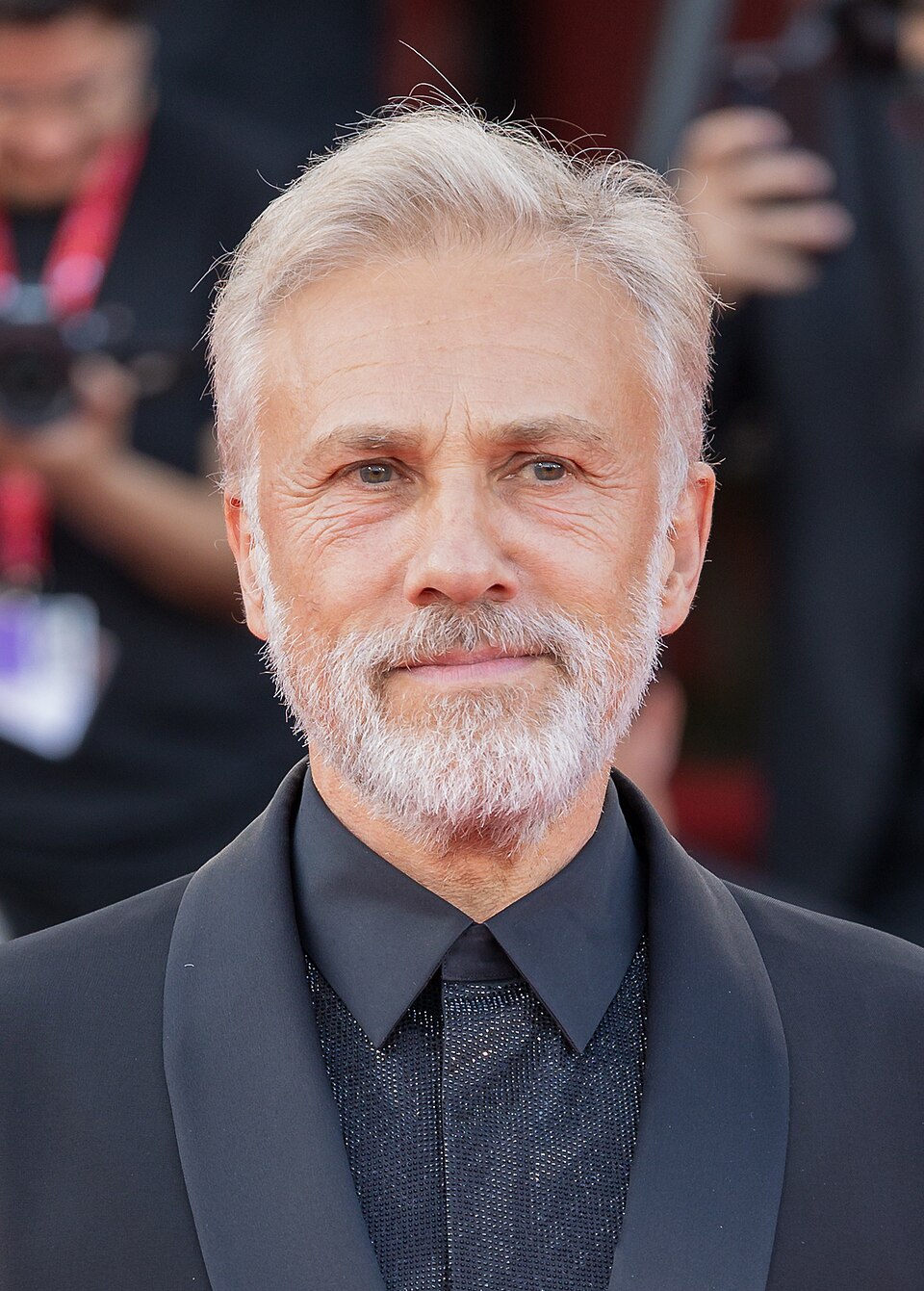
Before achieving global acclaim and becoming synonymous with charmingly sinister villains, Christoph Waltz was a dedicated, working actor in the German and Austrian film and television industry for decades. The journey of Christoph Waltz Jung (young Christoph Waltz) is a testament to perseverance, honing one's craft, and the often-unseen grind that precedes overnight success. His early career, though less illuminated by the international spotlight, was rich with diverse roles, invaluable experiences, and the meticulous development of the unique acting style that would later captivate audiences worldwide. This period was not merely a waiting game; it was a crucible that forged the formidable talent we know today.
The Formative Years: A Budding Talent in Austria and Beyond
Born in Vienna, Austria, in 1956, Christoph Waltz was practically destined for a career in the arts. His lineage boasts a rich theatrical heritage; both his parents, Elisabeth Urbancic and Johannes Waltz, were set designers, and his maternal grandparents, Maria Mayen and Emmerich Reimers, were prominent actors at the Burgtheater, Vienna's most prestigious stage. This environment undoubtedly instilled in him an early appreciation for performance and storytelling. He wasn't just born into the industry; he immersed himself in it from a young age, demonstrating a keen intellect and a burgeoning talent.
Waltz's formal acting education began at the renowned Max Reinhardt Seminar in Vienna, a breeding ground for some of Austria's finest theatrical talents. This rigorous training laid a solid foundation for his stage presence and dramatic abilities. Not content with local expertise alone, he further refined his skills in New York City, studying at the Lee Strasberg Theatre and Film Institute. This dual exposure to European classical training and American method acting provided him with a versatile toolkit, allowing him to adapt to various acting styles and demands. His early commitment to extensive training highlights a crucial lesson for aspiring artists: dedication to craft is paramount. It wasn't about instant fame, but about building an unshakeable foundation.
Upon returning to Europe, Waltz embarked on a career primarily in theatre, gracing stages in cities like Zurich, Cologne, and Hamburg. This period was crucial for developing his stagecraft, vocal projection, and ability to command an audience live. The immediate feedback loop of theatre productions allowed him to experiment, refine, and deepen his understanding of character. It was in these pre-camera years that the groundwork for his later expressive physicality and nuanced vocal delivery was truly established.
Navigating the German and Austrian Television Landscape
The late 1970s and 1980s saw Christoph Waltz transition increasingly into television, primarily in German and Austrian productions. For decades, he was a familiar face, though not yet a household name on an international scale. This era of his career is a fascinating deep dive into Young Christoph Waltz: Uncovering His Hidden Roles. He appeared in numerous TV films, mini-series, and popular episodic dramas that were staples of German-language television.
Among his extensive credits from this period are appearances in long-running crime series like Tatort and Derrick, which are institutions in German television. In these shows, Waltz often played a wide array of characters, from the earnest detective to the conflicted antagonist, showcasing his remarkable versatility long before Hollywood took notice. He also took on roles in more dramatic productions, demonstrating his capability to handle complex emotional arcs. For example, his role in the 1982 TV film Fire and Sword (Feuer und Schwert) offered a glimpse into his dramatic range even in historical settings.
One notable aspect of Waltz's early career was his willingness to take on diverse roles, often in supporting capacities. This wasn't about ego; it was about working, learning, and expanding his repertoire. Each role, no matter how small, presented an opportunity to practice, to observe other actors, and to understand the mechanics of film and television production. This consistent work ethic, enduring through years without a "breakthrough" moment, underscores a vital point: sustained effort in a creative field often yields long-term dividends, even if not immediately apparent. His commitment to the craft meant he was always prepared, always improving, even when the roles weren't glamorous.
Early International Exposure and the Long Road
While primarily active in German-speaking territories, Waltz also dabbled in a few international projects during this period. For instance, he had a role in the 1989 British production W.E.T. and later in the 1991 TV movie The Old Man Who Read Love Stories, an English-language production starring Richard Dreyfuss. These experiences, though not leading to immediate stardom, provided him with valuable exposure to different production cultures and further honed his multilingual abilities, particularly his impeccable English accent.
These decades as a working actor, often typecast in certain roles or relegated to supporting parts, could have been discouraging for many. However, Waltz approached each project with professionalism and a dedication to finding the truth in his characters. This period was crucial for developing the precision and nuanced performances that would later define his global success. It’s a compelling narrative explored further in Christoph Waltz Young: His Journey to International Fame, highlighting how these formative years were far from wasted.
The Craft of Acting: Developing a Unique Style
The extensive experience gathered by Christoph Waltz Jung was instrumental in shaping his distinctive acting style. He developed an ability to imbue even minor characters with a memorable presence, often through subtle gestures, precise vocal inflections, and an intense gaze. His stage background gave him a strong command of his physicality, which he masterfully translated to the screen. One could observe in his early work the seeds of the charismatic, yet unsettling, characters he would later portray.
- Linguistic Fluency: Waltz's proficiency in multiple languages (German, English, French) became a significant asset. Even in his early German roles, his precise articulation and ability to deliver complex dialogue stood out. This multilingualism would later be crucial for his international breakthrough.
- Nuance and Subtlety: Rather than relying on overt theatrics, Waltz often conveyed deep emotion or sinister intent through understated means. This meticulous approach to character, often described as intellectual, allowed him to create complex individuals rather than caricatures.
- Versatility in Genre: From crime dramas to historical pieces, and even comedies, Waltz navigated various genres with ease. This versatility was not just about taking diverse roles but about adapting his performance style to suit the demands of each narrative, a skill honed over many years.
This period also saw him direct a German television film, Wenn man sich traut (If You Dare), in 2000, demonstrating another facet of his creative abilities. Understanding filmmaking from a director's perspective likely further enriched his acting approach, giving him a broader understanding of how his performance fit into the larger cinematic tapestry.
The Long Road to International Recognition and Lessons Learned
Christoph Waltz's journey before Inglourious Basterds is a powerful example of an actor who consistently delivered high-quality work without the corresponding international recognition. For over 30 years, he worked diligently, took on challenging roles, and refined his skills, even contemplating a career change due to a lack of satisfying roles and the increasing pressure of the industry. This struggle is a familiar narrative for many actors, highlighting the immense dedication required and the often unpredictable nature of success.
His story offers valuable insights:
- Perseverance is Key: Waltz’s decades-long career before his global breakthrough illustrates that success can come at any age, provided one remains dedicated and passionate about their craft.
- Every Role Matters: Even in smaller parts, Waltz honed his skills. Each character, regardless of its prominence, contributed to his growth as an actor and the development of his unique style.
- Be Prepared: When the opportunity for a role like Hans Landa arose, Waltz was not only perfectly suited for it but also had the decades of experience necessary to fully embody such a complex character. His preparedness was not an accident but the result of relentless work.
The period of Christoph Waltz Jung, while not marked by red carpets and Oscar nominations, was arguably the most crucial phase of his professional life. It was here that he cultivated the depth, precision, and unique flair that would later make him an international sensation. It's a testament to the fact that true talent often takes time to ripen, and sometimes, the longest journeys lead to the most spectacular destinations.
In conclusion, Christoph Waltz's early career is far more than just a footnote to his Hollywood success. It represents a rich, challenging, and profoundly formative period that shaped him into one of the most compelling actors of our time. The journey of Christoph Waltz Jung is an inspiring narrative of dedication, resilience, and the relentless pursuit of artistic excellence. It reminds us that true mastery is often built brick by painstaking brick, far from the glare of immediate stardom, laying an unshakable foundation for the greatness that is yet to come.